What's the difference between a video concept and a script?
Both words appear in almost every video quote, often in the same line item, and clients are routinely asked to approve one without being told how it differs from the other. They commit you to very different things, and they cost very different amounts to change.
Key takeaways
- A concept is the idea. A script is the execution of it. One decides what the film is; the other decides what happens in it.
- The concept always comes first. A script written before a concept exists is just organised content.
- Approving a concept is the bigger commitment. It sets what can and cannot be changed later.
- Not every film has a script. Documentary-led work has a concept and a structure, and no dialogue written in advance.
- A treatment is neither. It is the document that presents a concept, and confusing it with the concept itself causes real problems.

What is the difference between a video concept and a script?
A video concept is the organising idea that determines what a film is about and why anyone would watch it. A script is the document specifying what is said and what happens, shot by shot or scene by scene. The concept decides the film's reason for existing; the script decides its contents. A film can exist without a script. It cannot exist without a concept.
What a concept is
A concept answers why. Why this film, why it takes this shape, why someone would watch to the end. It is usually expressible in one or two sentences, and if it takes a paragraph it is generally not finished.
A concept is not a description of content. "A film showing our manufacturing process with interviews from the team" is a content plan. "The people who build it are the only credible witnesses to how good it is, so they are the only voices in the film" is a concept — it determines who appears, what is excluded, and how the film is structured.
What a script is
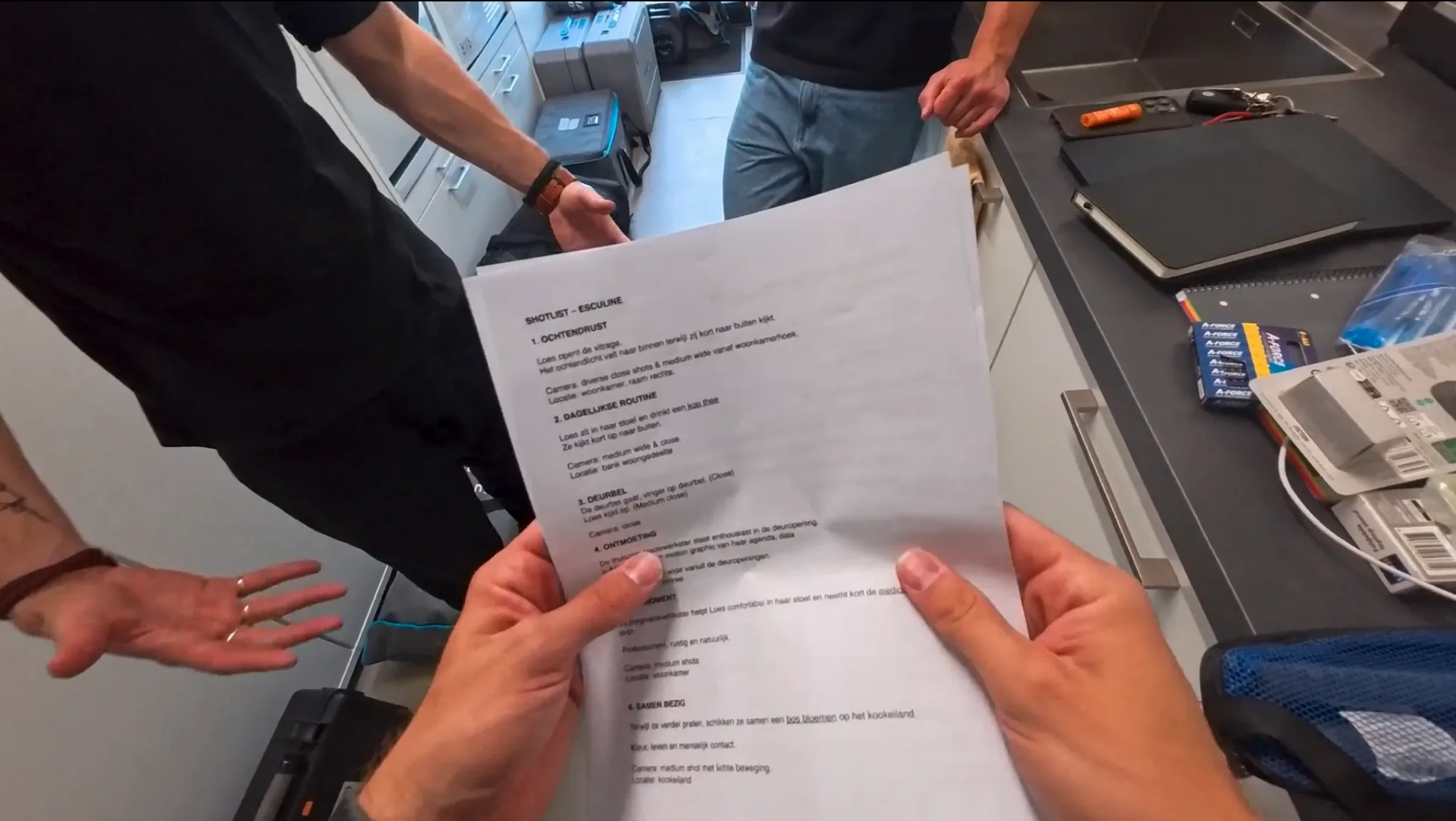
A script answers what. What is said, by whom, in what order, and what happens on screen while it is said. Depending on the production it may run as a two-column document with visuals against voiceover, or as scenes with dialogue and action.
A script is a production instrument. It drives casting, timing, location requirements, shot lists and budget. Its job is to make the concept executable, not to establish it.
Concept and script compared
| Concept | Script | |
|---|---|---|
| Answers | Why this film exists | What happens in it |
| Length | One or two sentences | One to several pages |
| Written | Before anything else | After the concept is agreed |
| Approving it commits you to | The film's structure, tone and argument | The words, the running order and the shoot requirements |
| Cost to change | Rises steeply. A reshoot after production | Low before the shoot, high after it |
| Always required? | Yes | No. Documentary-led work has none |
| Owned by | Whoever is accountable for whether the film works | Writer or director, with client input |
What are you actually approving?
This is where the distinction stops being academic.
Approving a concept sets the boundaries of every later conversation. Once the idea is agreed, feedback that contradicts it is not feedback, it is a change of direction, and it should be priced and scheduled as one. Clients frequently discover this at the script stage — asking for something that seems small and being told it undoes the concept.
Approving a script commits budget. The script determines how many locations, how many cast, how many shoot days and how much post. Changing it before the shoot is inexpensive. Changing it after picture lock means re-editing footage that was shot to serve different words.
The practical implication for anyone signing things off: spend disproportionate attention on the concept, and read the script for feasibility rather than for wording. Debating adjectives in a script while the concept goes unexamined is the most common way approval time gets spent badly.
Where does a treatment fit?
A treatment is a presentation document. It takes a concept and shows how it would look and feel — reference imagery, tone, structure, visual approach, sometimes a rough narrative walkthrough.
The confusion that causes problems is treating the treatment as the concept. A treatment can make a thin idea look convincing, because good design and good references are persuasive on their own. If a treatment is the first time you have seen the idea, ask for the concept in one sentence before you look at the images. Full definition in the director's treatment entry.
Films that have no script
A significant share of the work we make is scripted only in structure. Documentary-led brand films, customer story films and employer branding work are built from real conversations, and writing dialogue in advance would defeat the point.
These productions still have a concept, a shape, an interview framework and a shot plan. What they do not have is words agreed in advance. That is a deliberate choice with real consequences for how you approve the work: there is no script to sign off, so the concept carries more weight, and the first time you see the film is the edit. The trade-off is covered in documentary-style versus scripted.
Where this stops
This entry draws the distinction. Two adjacent questions:
- Why the concept decides the film: the concept is the film.
- How to build one: how to develop a concept that actually works.

Related reading
Been sent something to approve?
If you are not sure whether you are looking at a concept, a treatment or a script, that is worth resolving before you sign it. Happy to talk it through, whether or not we made it.
Book a 20-minute callOr email info@madebydot.com
Last updated: