Inside a production: from first call to final grade

Commissioning a film is an unusual purchase: you agree the price before the thing exists, and most of what determines the outcome happens in rooms you are not in. Here is what actually occurs at each stage, how long it takes, and the four points where timelines quietly go wrong.
Key takeaways
- The shoot is the shortest phase and the one everyone focuses on. Concept and post take far longer.
- Two to twelve weeks covers most projects, brief to final delivery.
- Client feedback is the single biggest schedule variable. Not the crew, not the weather.
- Consolidate feedback into one voice. Contradictory notes from four people cost a round every time.
- Nothing meaningful can change after picture lock without cost. That point should be marked clearly and understood by everyone.
What are the stages of a video production?
Seven: scoping, research and concept, pre-production, the shoot, the edit, finishing (grade, sound and score) and delivery. Most projects run two to twelve weeks from brief to final file. The shoot occupies one to three days of that; concept development and post-production account for the overwhelming majority of the elapsed time.
The seven phases
| Phase | Typical duration | What you do |
|---|---|---|
| 1. Scoping call | 20 minutes | Describe the problem, not the format |
| 2. Research and concept | 1–4 weeks | Provide access to people. Choose a direction |
| 3. Pre-production | 1–3 weeks | Approve treatment, cast and locations |
| 4. Shoot | 1–3 days | Turn up, or don't. Both are fine |
| 5. Edit | 1–3 weeks | Two rounds of consolidated feedback |
| 6. Finishing | 3–7 days | Approve the graded film. Small changes only |
| 7. Delivery | 1–3 days | Confirm formats and destinations |
Bands per service are on the services page. A single-location B2B film runs at the short end; a multi-market campaign with language variants runs at the long end.
1. The scoping call
Twenty minutes, and its purpose is diagnosis rather than sales. Most briefs arrive named as a format — "we need a brand film" — and turn out to be a different problem underneath. A positioning issue described as a film request. A pipeline issue described as a social problem.
The questions that get asked here are the eight in the brief is where most video projects are already won or lost. The two that change the estimate most are the budget and who signs off.
What comes back within a few days is a proposal with a line-itemed budget rather than a single figure — production days, talent, locations, post complexity and deliverable count as separate numbers, so it can be interrogated.
2. Research and concept
One to four weeks, and the phase clients most want to compress. It is also the cheapest place to change your mind, which makes compressing it a false economy.
What happens: interviews with your team and, where it matters, with your customers. Not a workshop — conversations, long enough that the second and third answers arrive, because the useful material is rarely in the first. From that, two or three distinct creative directions with a recommendation attached.
What you get at the end is a concept, expressible in a sentence, and a treatment showing how it would look. Those are different documents doing different jobs, and it is worth knowing which you are approving — set out in video concept vs script.
This is the last cheap decision point. Changing direction here costs a conversation. Changing it after the shoot costs the shoot.
3. Pre-production
One to three weeks of unglamorous work that decides whether the shoot day functions.
- Casting. Real people or professional performers. The highest-return decision available and the one most often rushed.
- Locations and permits. Recces, access, power, noise, and the permissions that take longer than anyone expects on operating sites.
- Scheduling and call sheets. Who is where, when, and what happens if it rains.
- Shot planning. Including the vertical versions and language variants, blocked now rather than retrofitted later.
- Wardrobe and art direction notes. One email that removes the most common frame-level problems.
The deliverable list is finalised here, and it has to be. Framing must allow for a crop on the day if a 9:16 version is required, and that cannot be decided in the edit.
4. The shoot
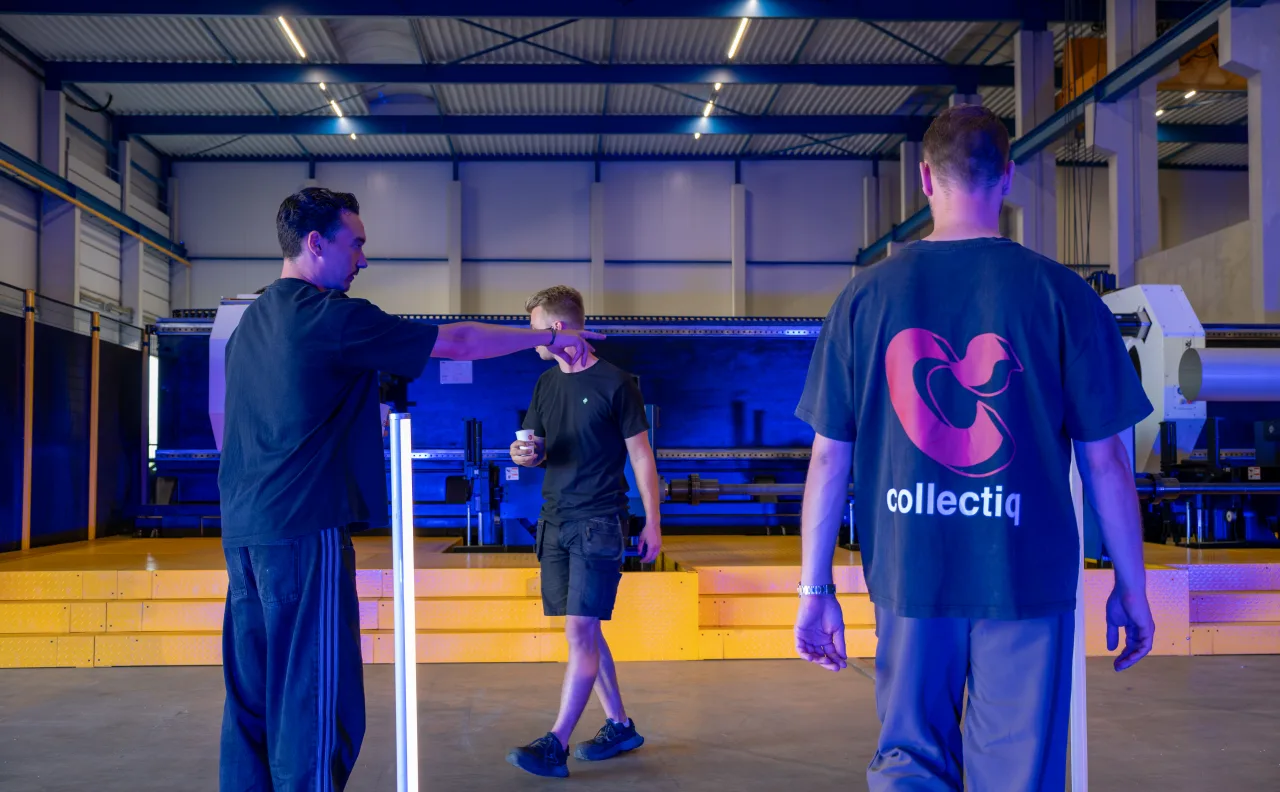
One to three days. The shortest phase, the most visible, and the one with the least discretion — by this point the decisions have been made and the day is about executing them well.
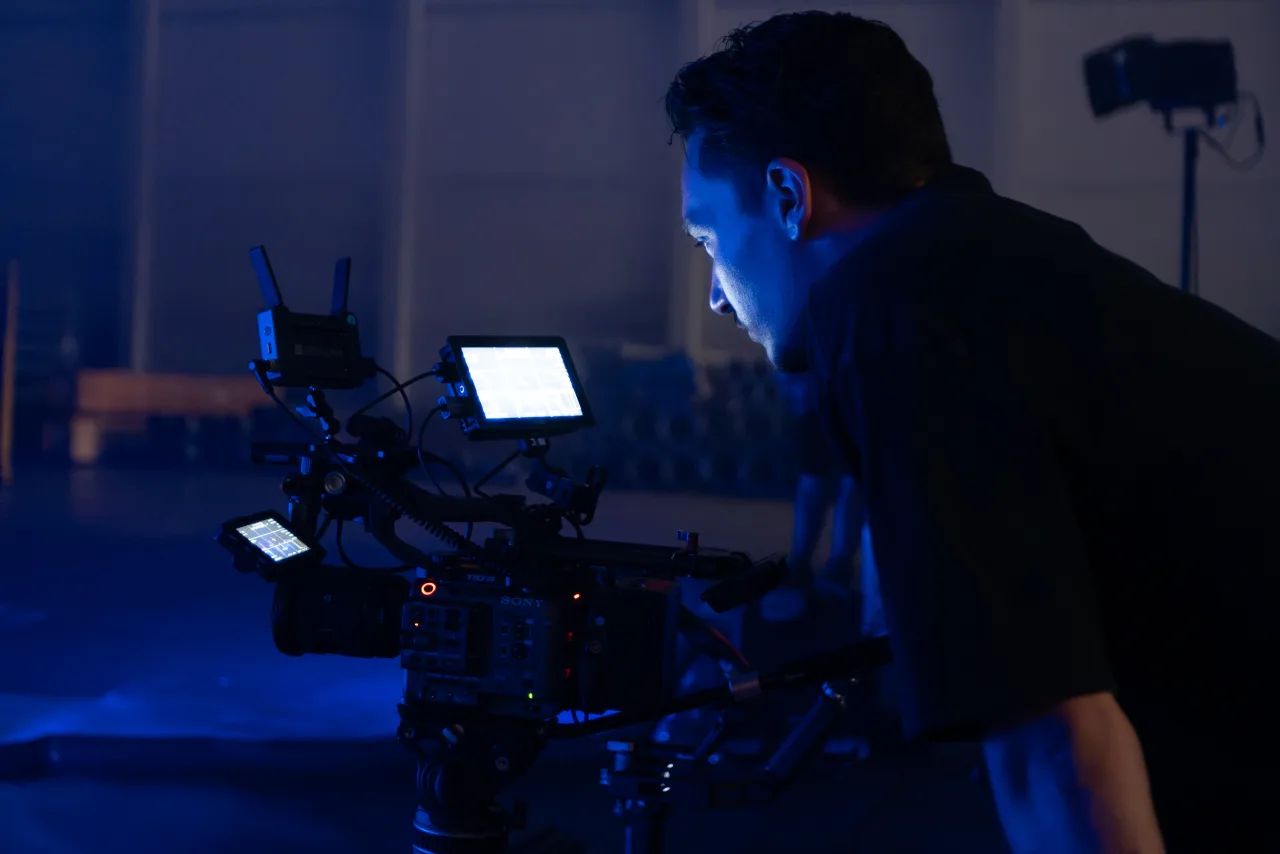
A typical day: crew arrives early to light, first setup takes longest, and the schedule is built so the most important material happens before energy drops. Small crews on purpose, because the people in front of the camera behave more like themselves when there are six people in the room rather than sixteen.
Clients ask whether they should attend. Genuinely optional. Useful if decisions may be needed on the spot; less useful if your presence changes how your colleagues behave on camera, which it sometimes does. If you do come, the most valuable thing you can bring is the authority to approve a change without a phone call.
Something always goes wrong — weather, access, someone unavailable. A concept with a load-bearing element and a set of things that can be lost survives that. One that depends on everything going right does not.
5. The edit
One to three weeks, and where the film is actually made — particularly on documentary-led work, where the structure is found rather than executed.
The sequence is a rough assembly first, then a first cut for review. Two rounds of feedback, defined in advance, is the standard shape. It exists to prevent the revision spiral, which is the most expensive failure mode in post and is almost always a process problem rather than a creative one.
Two things make feedback work:
- Consolidate it. One document, one voice, contradictions resolved on your side first. Four stakeholders sending separate notes costs a round every time, because someone has to adjudicate and that someone should not be the editor.
- Say what is wrong, not what to do. "It drags around forty seconds" is more useful than "cut the third shot". The first identifies a problem; the second prescribes a solution that may not be the right one.
Picture lock ends this phase. After it, the grade and the sound mix are built on the locked cut, and changing the edit means unpicking both.
6. Finishing: grade, sound and score
Three to seven days, in-house, and the phase clients see least of despite it carrying a large share of the perceived quality.
- Colour grade. Shot-to-shot consistency first, then the look. A film shot across a day drifts, and correcting that is invisible work that is glaring in its absence.
- Sound design. Dialogue cleaned, atmosphere built, detail placed. Roughly half of perceived quality sits here on a line that usually gets under ten per cent of the budget.
- Original score. Written to the locked cut so musical events land on the film's events. Composition actually begins during the edit rather than after it, so picture and music arrive at lock together.
Feedback at this stage should be limited to the look and the mix. A structural note here is a return to phase five and should be priced as one.
7. Delivery
One to three days. Masters, cutdowns, vertical versions, subtitle files and platform-specific encodes, each to the technical spec its destination requires. Broadcast and cinema have their own deliverable standards and those are produced to spec rather than approximated.
Two things worth settling before this point rather than during it: what you are licensed to use and for how long, and whether raw footage and project files are included. They usually are not. Both are covered in who owns the footage after a video production, and they are far cheaper to agree at briefing than in year two.
Where projects actually slip
Four places, and only one of them is production.
- Feedback latency. A cut sent Friday and reviewed the following Thursday costs a week of calendar for zero work. This is the largest single variable in whether a project lands on time.
- A stakeholder discovered late. Legal, works council, a regional managing director with a view. Cheap in week one, very expensive in week six. Naming everyone with an opinion at briefing prevents it.
- Access to people. Interviews and on-camera contributors need diaries booked early. Waiting until pre-production to ask is the most common cause of a slipped shoot date.
- Scope added after the deliverable list is agreed. An extra language, an extra format, a vertical version nobody mentioned. Each is straightforward in isolation and each moves the date.
Notice that all four sit on the client side. That is not an accusation — it is the useful part of the answer, because they are the four things you can actually control.
How does DOT run it?
DOT Video Agency runs all seven phases in-house, including grade, sound and original composition. Founders Tijmen van Grieken and Jesper de Rek take the scoping call, write the concept and direct the shoot, so the same people carry the intent from first conversation to final file.
There is no account layer, which means feedback reaches the people who made the thing without translation. Some clients find that faster; some would rather have a buffer, and that is a legitimate preference worth naming early. The timeline is confirmed at briefing and held to.
Related reading
Working out whether a date is achievable?
Tell us the deadline first and we will tell you honestly whether it fits. If it does not, that is worth knowing in twenty minutes rather than in week four.
Book a 20-minute callOr email info@madebydot.com
Last updated: