Why custom music elevates a brand film
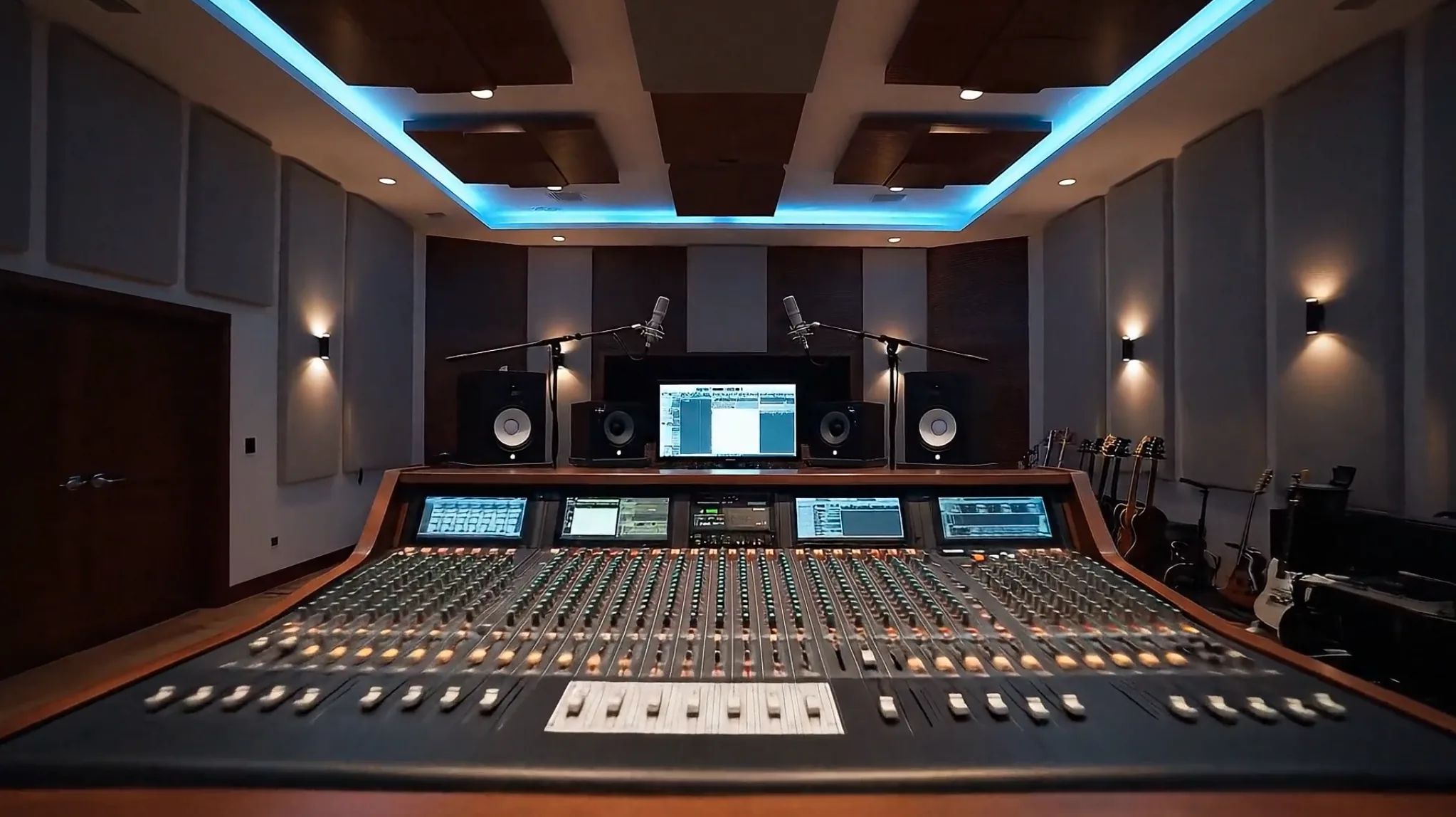
Music is the last thing added to most brand films and the first thing an audience feels. It is also the line most likely to be solved with a thirty-euro stock licence at the end of a six-figure process. That mismatch is worth examining, because the gap between a licensed track and a written one is larger than almost anyone expects.
Key takeaways
- Sync is the whole argument. A written score lands its musical events on the film's events. A licensed track cannot, so the edit bends to the music instead.
- Licensed tracks are not exclusive. The track under your brand film is under other brands' films, including possibly a competitor's.
- Licensed music carries rights that outlive the production. Territory, term and media limits apply to the music separately from the film.
- Original composition is not automatically expensive. A simple bespoke cue is frequently comparable to a premium library licence with broad usage.
- DOT has composed more than 150 original tracks since 2018. Both founders came from music, which is why it is in-house rather than outsourced.
Should a brand film use original or licensed music?
Original music is the stronger choice when a film has to carry emotion, hit specific edit points, run for years, or appear in multiple markets. Licensed music is a reasonable choice for high-volume, short-life content where speed matters more than distinctiveness. The deciding factors are sync, exclusivity and usage rights rather than cost alone.
What does "written to the edit" actually mean?
It means the music changes when the film changes. The swell arrives on the cut it was meant for. The drop lands on the reveal. The last chord resolves as the logo appears rather than four seconds before or after.
A licensed track was written with no knowledge of your film. Its structure — where it builds, where it breaks, how long it takes to arrive — was decided by someone else for someone else. Which leaves an editor two options, both of them compromises:
- Cut the film to the music. The edit gets shaped by a stranger's arrangement. Shots are held or trimmed to hit musical events rather than because the story wanted it.
- Cut the music to the film. The track gets chopped, looped and cross-faded to fit. It works, usually, and it almost always leaves seams that a viewer registers as slightly off without identifying why.
With original composition the question disappears. The film is locked, and the music is written to it. Every musical event is available to be placed where it does the most work.
That synchronisation is a large part of what people are describing when they call a film cinematic — the sense that picture and sound are the same object rather than two things laid on top of each other. It is explored further in what actually makes a video cinematic.
Who else is using your music?
Anyone who paid the same licence fee. That is the business model, and it is not a flaw in it.
The practical consequence is that popular library tracks become period markers. A track that trends on a stock platform appears in thousands of films within a year, and the audience — particularly the marketing audience your film is often being shown to internally — recognises it. Worse, sound is strongly associative. A viewer who has heard that track under another brand's film brings that brand with them.
For a social post with a two-week life, this genuinely does not matter. For a brand film that will sit on a homepage for three years, front a recruitment campaign, or open a conference, it matters considerably. The film is meant to be the most distinctive asset the brand has, and the layer carrying most of its emotional weight is shared with everybody.
What happens to licensed music later?
It carries its own restrictions, and they sit underneath whatever was agreed for the film itself.
Library licences are scoped by territory, term and media. A track licensed for online use in the Netherlands does not automatically cover a Connected TV buy, a cinema screening, a German cutdown, or a fourth year of use. Each of those can trigger a new fee, and the fee is negotiated at the moment you have a deadline and no alternative — which is the worst possible moment.
Commissioned music largely removes this. Where a composition is written for the film and the rights are agreed upfront, the recurring exposure disappears. That is a commercial argument as much as a creative one, and it is set out in full in who owns the footage after a video production.
Original score vs licensed music
| Original score | Licensed track | |
|---|---|---|
| Sync to the edit | Exact. Written to picture | Approximate. Edit or track has to bend |
| Exclusivity | Yours | Shared with every other licensee |
| Territory and term | Agreed once, upfront | Limited by the library terms |
| Revisions after a recut | Rewritten to the new cut | Re-edited, with new seams |
| Brand consistency across films | A recognisable sonic identity is possible | Each film sounds unrelated |
| Speed | Days, alongside the edit | Minutes |
| Best for | Brand films, campaigns, anything with a long life | High-volume social, internal content, fast turnaround |
What is a sonic identity, and do you need one?
A sonic identity is a set of musical decisions — instrumentation, harmonic character, tempo range, a recurring motif — applied consistently across a brand's films so that they are recognisable as related before anyone sees a logo.
Most brands have a rigorous visual identity and no audio equivalent at all. Typography is specified to the point size. Music is chosen per project by whoever is closest to the edit. The result is a body of work that looks like one company and sounds like eleven.
This only becomes worth building when there is volume — a campaign system, an always-on programme, a series. At that point a motif written once and varied across films is both cheaper per film than licensing separately and substantially more coherent.
When is licensed music the right call?
Often, and it is worth being straightforward about that rather than arguing the position absolutely.
- High-volume social. Twelve pieces a month with a short life. Distinctiveness matters less than cadence, and platform-native audio conventions apply anyway.
- Internal communication. Nobody is forming a brand impression from a policy update.
- Genuine urgency. If the film ships in three days, a library track is the honest answer.
- Where a specific known track is the idea. Sometimes the reference is the point, and then the conversation is about commercial sync rights, which is a different and usually much larger number.
The distinction that actually holds: licence for content, compose for film. If the piece is meant to be seen once and scrolled past, licence it. If it is meant to represent the company for the next three years, it deserves music that only belongs to it.
What does original music cost?
Less than most people assume, largely because the comparison is usually made against the cheapest possible library tier rather than a like-for-like one.
A premium library licence with broad territory, extended term and broadcast rights is not a thirty-euro purchase. Compared against that, a straightforward bespoke cue is frequently in a similar range — and it arrives exclusive, synced and without a renewal date.
At DOT, composition sits inside the production rather than as a separate line item on most brand film work, because the studio is in-house. Full price bands per service are on the services page, and brand film specifically on the brand films page.
How does DOT do it?
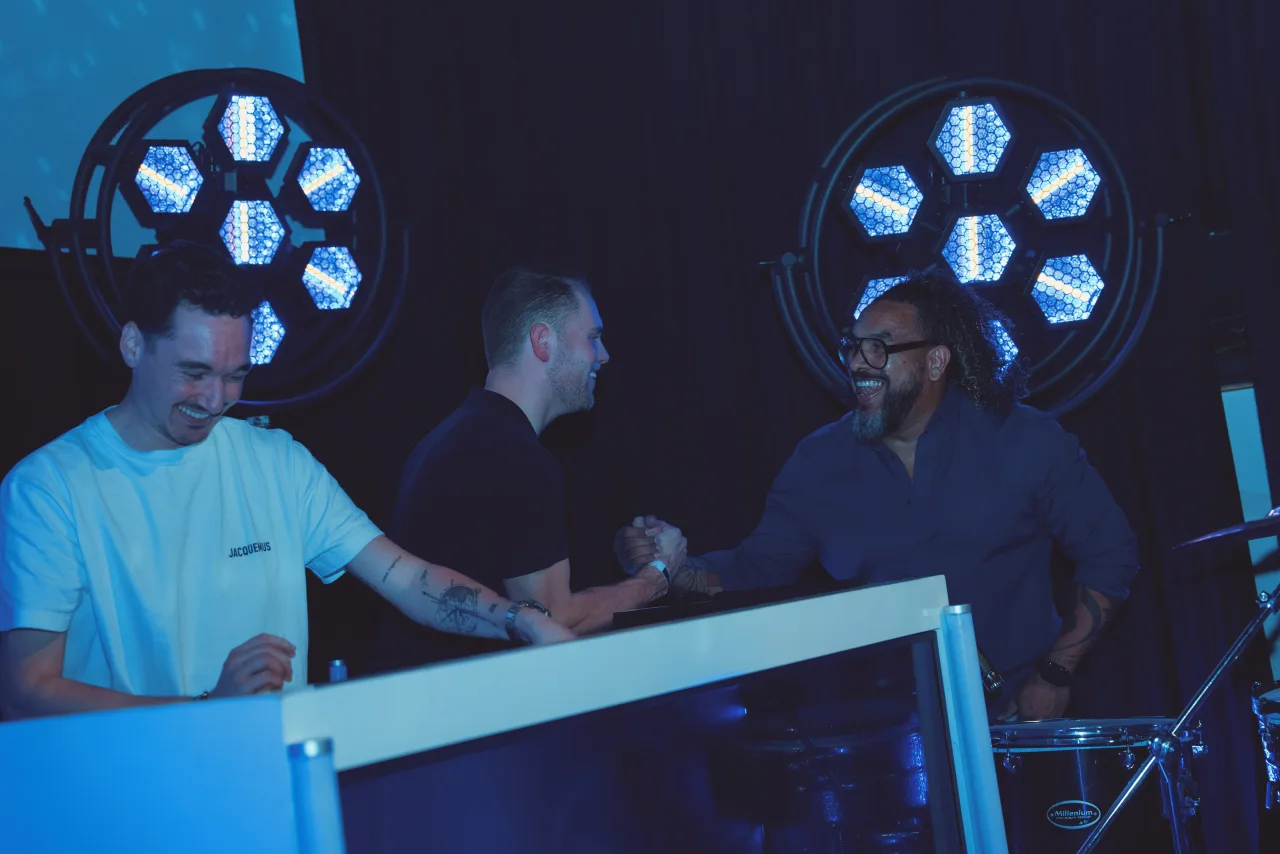
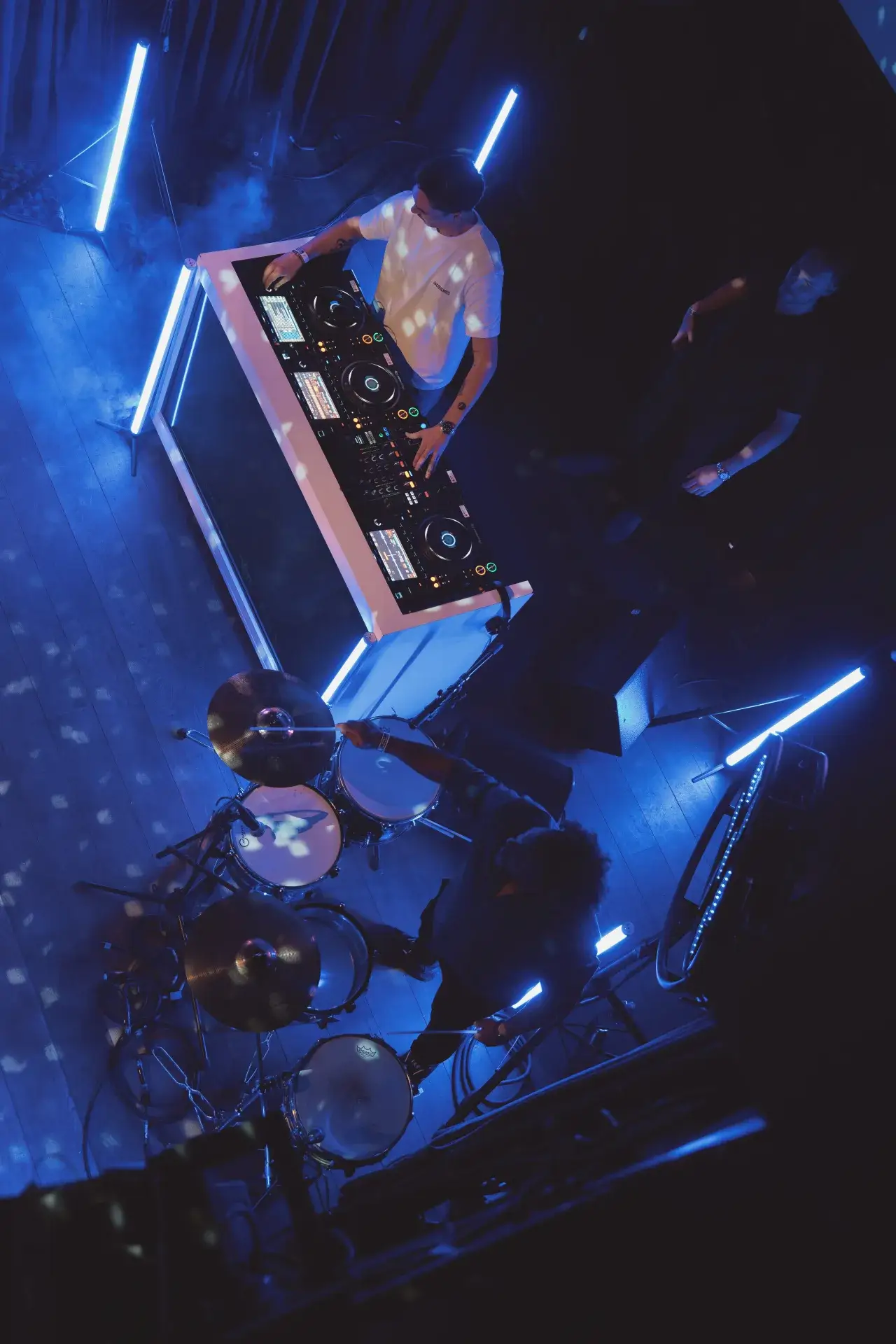
DOT Video Agency composes original music in-house and has written more than 150 custom tracks since 2018. Founders Tijmen van Grieken and Jesper de Rek both came from music before film, which is the reason it is a core capability rather than a subcontracted line.
Practically, composition starts during the edit rather than after it. A rough direction is established against the assembly, and the score develops as the cut does, so that picture and music arrive at lock together. It removes the most common late-stage failure in brand film, which is a finished edit waiting for a track that never quite fits.
It also means the conversation about music happens at the concept stage, where it belongs. Music is not a finishing decision. It is one of the three or four things that determine whether a film works at all.
Related reading
Want to hear what this sounds like?
The fastest way to settle the original-versus-licensed question is to hear the same film cut both ways. We can walk you through examples in twenty minutes.
Book a 20-minute callOr email info@madebydot.com
Last updated: